Sustainability
sustainability

Race to Zero
WACKER has joined Race to Zero, the UN's carbon neutrality initiative. We want to pursue specific projects and measures to halve our greenhouse gas emissions by 2030 and to ensure that how we work and make products achieves net- zero by 2045.
Wacker Initiatives
Overview of Wacker's efforts
We Lead the Way.
WACKER is setting itself new, ambitious goals to achieve net-zero in 2045. The new goals to cut greenhouse gases are science-based targets. In other words, they are consistent with the goal of keeping the global rise in temperature below 1.5 degrees Celsius and therefore comply with the Paris Agreement. WACKER has joined Race to Zero, the UN’s carbon neutrality initiative. We are thus voluntarily committing to the 1.5-degree target and undertaking to issue transparent progress reports on our course toward net-zero.
Strategy
strategy
SustainaBalance®
Aimed at attaining a more sustainable society, this strategy, "SustainaBalance®," comprises three principles designed to promote the balance between ecological, social, and economic factors.
-
Value Up
By empowering our teams, we enable our customers to provide more sustainable solutions.

-
Footprint Down
We create efficient and safe processes, use resources responsibly, avoid waste and minimize our footprint.

-
Collaboration Beyond
As a contributing member of society, we strive for a sustainable value chain together with all our partners.

Purpose
goal
2030 is a key milestone on our way to meeting this goal. That’s why we’ve set ourselves even more ambitious sustainable development goals:
100% Sustainable Products by 2030

Sustainable Products /
By 2030, all our products will meet defined sustainability standards (in line with WACKER Sustainable Solutions
100%
50% decrease in greenhouse gases by 2030
Greenhouse Gas Emissions
By 2030, WACKER wants to have cut its absolute greenhouse gas emissions by 50 percent relative to 2020
-50%
25% drop in emissions relating to upstream products by 2030

Upstream-Product Emissions
By 2030, WACKER expects a 25-percent drop(*) in emissions relating to the upstream products it uses. (*) refers to the amount of greenhouse gases emitted throughout the process from sourcing raw materials to manufacturing, selling, consuming, and disposing of products. This excludes direct emissions from our own facilities (Scope 1) and indirect emissions from our own operations (Scope 2).
-25%
15% reduction in specific water withdrawal by 2030

Water Withdrawal
WACKER has set itself a new goal relating to specific water withdrawal, which we aim to have reduced by 15 percent by 2030
-15%
15% drop in specific energy consumption by 2030

Energy Consumption
WACKER has set itself a new goal relating to specific water withdrawal, which we aim to have reduced by 15 percent by 2030
-15%
100% Sustainable suppliers

Sustainable Suppliers
Our goal is for 100 percent of our key suppliers to meet defined sustainability standards.
100%
Certificatiion
EcoVadis
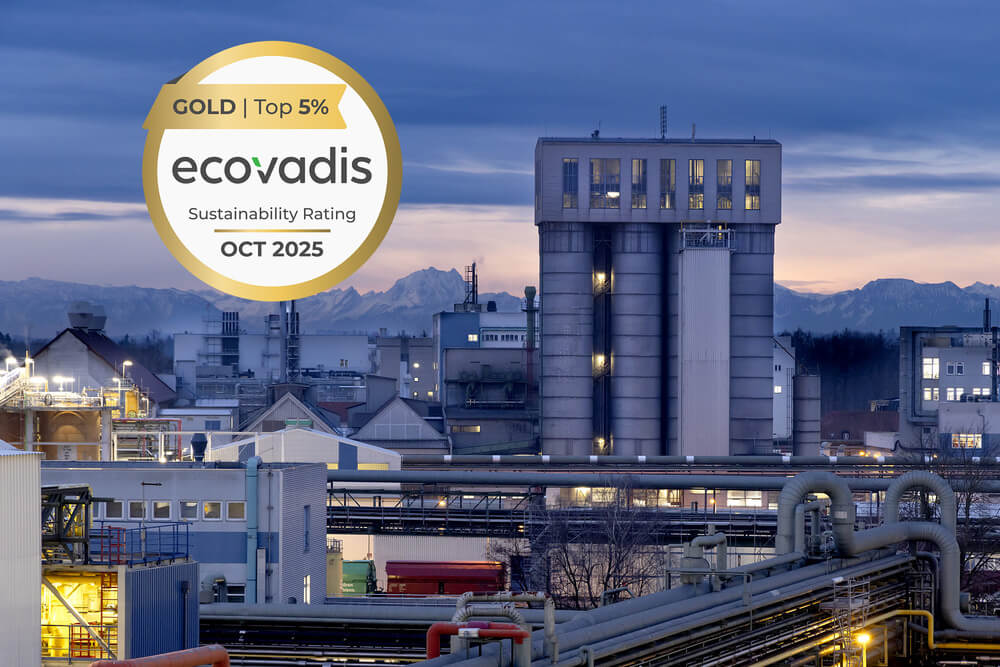
The WACKER Group's sustainability performance as a supplier has received an external evaluation by EcoVadis, and its score is a gold medal. This result ranks the company in the top 3% of the best-scoring companies.
WACKER's EcoVadis certificate (English), highlights (English), and highlights (Japanese) are available for download.
SBT
SBT (Science Based Target) refers to corporate greenhouse gas emission reduction targets that are aligned with the level required by the Paris Agreement. WACKER Group is one of the world’s first chemical companies to receive SBT certification for its net zero target for 2045.
- Reference article
- 新しいウィンドウで開きますRace to Zero - Wacker Chemie AG
RSPO
Sustainable Palm Oil
Palm oil has been widely criticized for frequent violations of human rights and environmental protection guidelines during its production process. Although our company does not procure large quantities of palm oil, we are committed to sourcing it exclusively from certified, sustainable suppliers.
We have obtained RSPO (Roundtable on Sustainable Palm Oil) certification and are promoting sustainable procurement by increasing the proportion of certified raw materials in the palm oil we use.

Sustainability Blog